
TYPOGRAPHIC ILLUSTRATION & MERCH STRATEGY
PARSONS PROJECT (2022)
TYPE ZOO
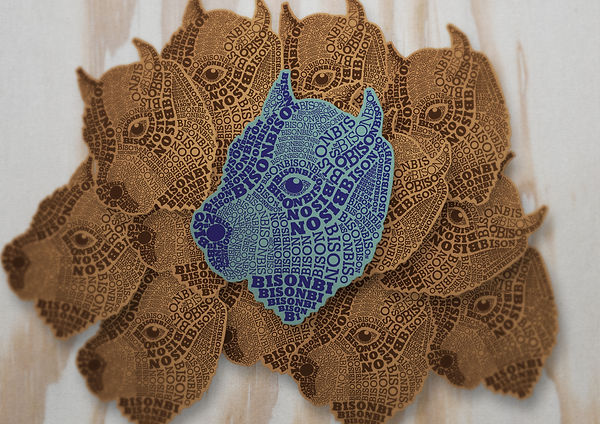
By constructing animals entirely with typography, this project reimagines zoo aesthetics through design-forward visuals, opening space for merchandising and communication that speaks to adult audiences in a city like New York.
The Wildlife Conservation Society (WCS) is a nonprofit organization that works in over 50 countries, operates 5 wildlife parks in New York City, and pursues a mission through 4 pillars:
CONSERVATION ACTION
EDUCATION
INSPIRATION
SCIENTIFIC RESEARCH
THE HIDDEN PROTAGONIST
The most overlooked pillar may just be the most important one: inspire people to value nature. That's the starting point: if you don't value something, you won't take care of it. Because of its headquarters in one of the world's largest metropolises, WCS has a particularly significant role in reconnecting urban-dwellers to wildlife.
A BEACON OF HOPE
A remarkable example of how spaces like zoos can inspire people to respect nature is Paul Rosolie: a conservationist who was born in chaotic NYC, but fell in love with wildlife during childhood visits to the Bronx Zoo. Their "Jungle World" exhibit encouraged Paul to visit the Peruvian Amazon, where he has now lived for over 15 years and helps to protect over 100,000 acres of wild land.


OPPORTUNITY
Combining all five locations, the WCS receives around 3.5M annual visitors. Meanwhile, Central Park alone welcomes over 40M people each year. This contrast is important because the entrance to the Central Park Zoo is along one of the park's busiest walkways: it's an area where millions of locals and tourists can be impacted even if they choose not to go inside.
DESIGN AS AN INVITATION
Animals have drawn human fascination for thousands of years, serving as visual subjects from cave paintings to William Hornaday's 1888 bison taxidermy, or plushies that become every kid's best friend. But every zoo sells the same toys, and it's increasingly difficult to create brands that stand out, especially in a place like New York - a city of museums, murals, and galleries - where visual language matters. With this challenge in mind, Type Zoo proposes the implementation of a new visual system to complement the traditional kids-first zoo aesthetics. The goal is not to replace WCS's existing brand identity, but to introduce a parallel set of assets that spark curiosity in a more adult, design-conscious audience, especially those roaming through the world-famous Central Park.

Animal illustrations made entirely out of typography invite the audience to pause and take a step closer.


Posters have a limited color-palette so they don't outshine their environment, but the composition stands out for those who pay a little more attention.

Typographic illustrations become the foundation for a line of merchandising, enabling people to take part of the zoo home.


Larry Daley (Ben Stiller) & Theodore Roosevelt (Robin Williams) in Night at the Museum, 2006

Complementing the typographic bison illustration, this American Bison Society icon sets the ground to connect merchandising and education, referencing the WCS's role in the conservation of the buffalo. The depiction of Theodore Roosevelt references his role as honorary president of the ABS while attracting audiences who may recognize him from the popular Night at the Museum movie, set at the Museum of Natural History, which is at a walking-distance from the Central Park Zoo.


Scene from Madagascar, 2005, depicting the Delacorte Clock.

Instead of highlighting a historical figure, the icon created to complement the lemur's typographic illustration depicts the Delacorte clock, an iconic Central Park landmark that features dancing animal statues. The clock was featured in the animation Madagascar, which introduced the Central Park Zoo to kids all around the world and, much like the WCS, aimed to inspire younger generations to create an emotional bond with nature and wildlife.
Make it so people can wear it


Make it colorful


Go wild




DESIRED OUTCOME
Speak to the city through design and sell items that make the city speak for and about the WCS and their parks, such as the Bronx and Central Park Zoos. Renewed brand awareness will highlight WCS's relevance in the cultural capital of the Western world, advancing their agenda of connecting the concrete jungle to the wild.
FURTHER READING
REFLECTION #1
On the note of experimenting with new visual languages and leveraging NYC as a setting, the second "season" of this project could focus on creating assets that reference nearby museums. Where else in the world can you see a snow leopard, a Picasso, an Egyptian temple, a Pollock, and a grizzly bear in the same afternoon, all within the same urban park? The Central Park zoo is at a walking distance from the Metropolitan, Frick Collection, Guggenheim, MoMA, Cooper Hewitt, and many other globally famous art and culture institutions. No other zoo can say that, so it only makes sense to take advantage of this privileged location to create products and experiences that no other zoo offers. This idea could be executed as: (1) artistic renditions of animals in the style of famous painters or (2) partnerships with museums to create limited-edition product lines that can be sold in both places, along with exclusive activations. Since styles aren't copyrighted, the prior would be easier to accomplish, as it wouldn't require any authorization or negotiation, but the latter has the potential to break the bubble of local tourism and create iconic cultural moments beyond New York - just like many other ideas that were born in the city and took over the world.
REFLECTION #2
Historic figures are often the center of debates surrounding world views that are no longer acceptable in our contemporary society, and important conservation leaders of the past, like William Hornaday and even Teddy Roosevelt, are no different. Still, actions such as the foundation of the American Bison Society should be praised as a positive legacy, which is why I believe that Teddy serves as a great symbol to introduce younger audiences to the incredible story of the Bronx Zoo and WCS. That being said, the historical cultural connection between Native Americans and the bison should also be highlighted, especially since partnerships with peoples such as the Osage Nation have been at the center of the most recent WCS bison conservation efforts, since 2005. To honor this new phase of the American Bison Society, we could develop additional icons that depict indigenous leaders or symbols, pending their approval.